

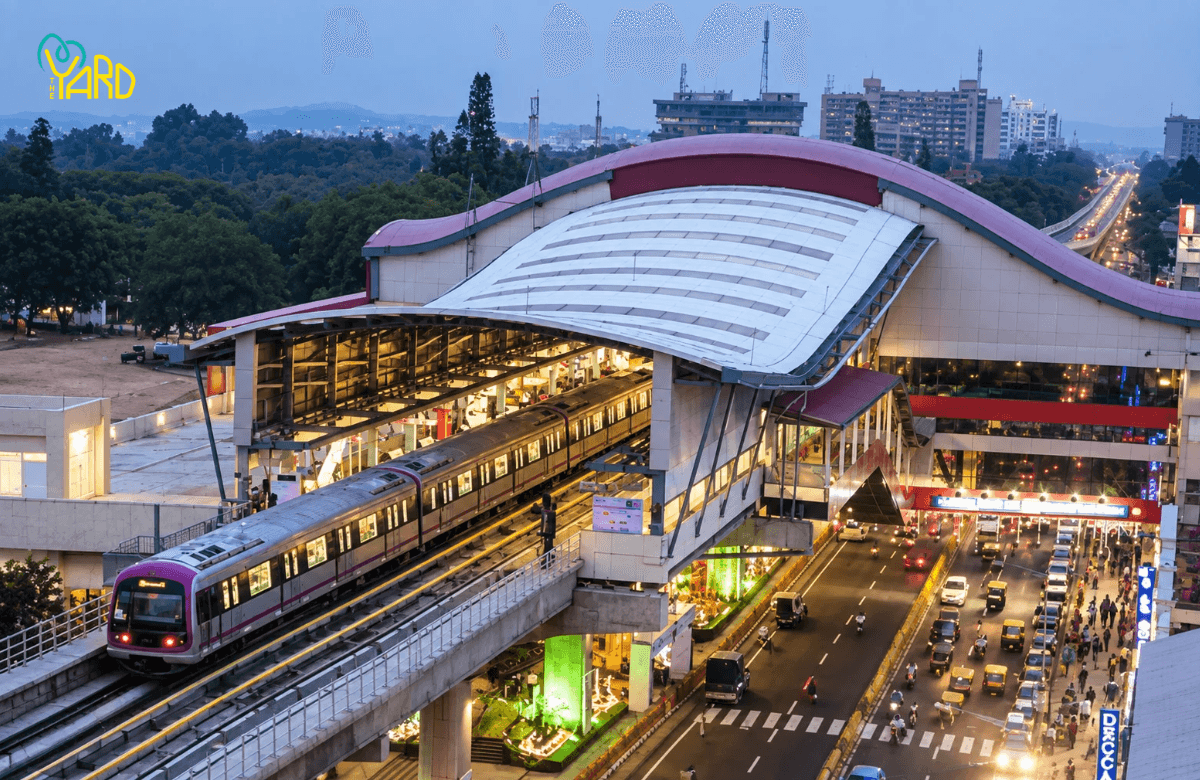
How Namma Metro Phase 2 & STRR Are Changing Where Bangalore Teams Choose to Work
Bengaluru’s next workplace choice may depend as much on how employees reach an office as where that office is located.
The city’s office market remains exceptionally active. Bengaluru recorded 10.5 million sq ft of office leasing in H1 2026, the highest among India’s top seven office markets, according to Colliers. At the same time, flexible workspace leasing reached an all-time high nationally, showing how companies are becoming more selective about where and how they work.
That makes Bangalore office locations about more than rent, amenities or proximity to a business district. Employee commute, public transport, last-mile access and the ability to reach different parts of the city are increasingly part of the equation.
Two transport projects are especially relevant: Namma Metro’s Phase 2A and 2B Blue Line and the Satellite Town Ring Road, or STRR. Together, they are changing how different parts of Bengaluru connect with established employment areas and outer areas.
But what does that actually mean for businesses choosing a workplace today?
Why Connectivity Is Becoming a Workplace Decision in Bangalore
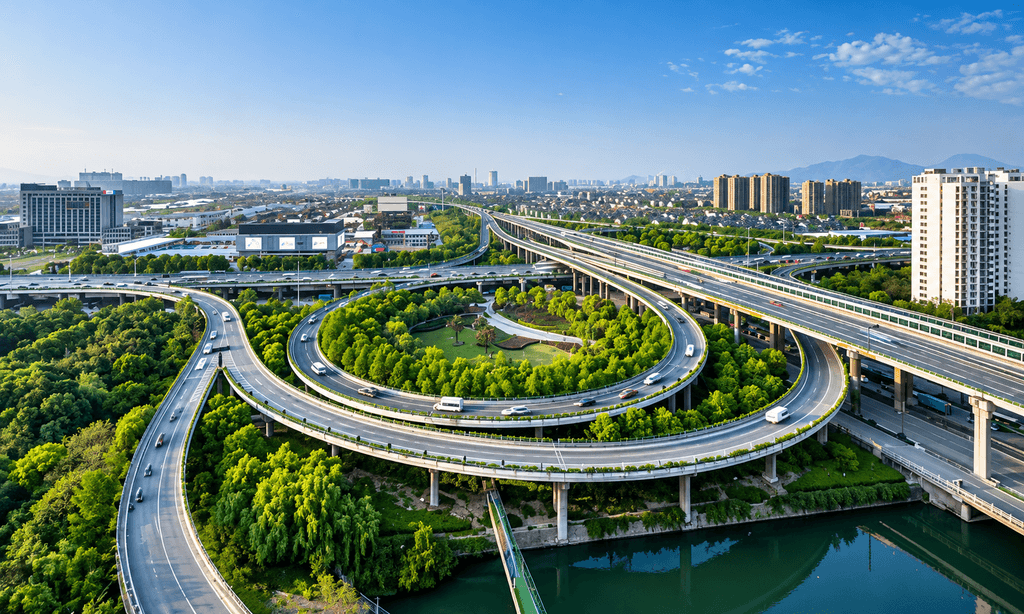
For a growing team, an office location matters much more than the address listed on a website. It affects how easily employees can get to work, which areas a company can realistically recruit from and how convenient the office is for clients and partners.
This is relevant in Bengaluru, where major business areas have developed across different parts of the city rather than around one single central business area. Current office-market data shows continued demand in established business corridors, including areas around the Outer Ring Road and Peripheral East.
For employees, office commute in Bangalore can be a deciding factor in how practical regular office attendance feels. A workspace that is technically close to a major business hub may still be inconvenient if the final journey involves heavy traffic or poor last-mile connectivity.
The same applies to hiring. A company isn’t choosing an office only for its current employees. It is choosing a location that future employees, candidates, clients and collaborators need to reach.
This is where better public transport and road connectivity can gradually expand the area a workplace can realistically serve.
What Namma Metro Phase 2 Means for Bangalore’s Office Geography
Namma Metro’s Blue Line is being built in two connected sections. Phase 2A runs for around 19.75 km between Central Silk Board and KR Puram along the Outer Ring Road, while Phase 2B continues from KR Puram towards Kempegowda International Airport through Hebbal.
The difference matters because the two sections have different construction schedules. As of August 2026, BMRCL had said the Silk Board-KR Puram section was expected to open by the end of 2026, while the full 58-km Blue Line was expected to open in phases, with completion of the entire corridor now reported for March 2028.
For businesses, the important point is not just that a new Metro line is being built. It is that the line passes through an existing business area and could make several major office areas easier to access by public transport once operational.
Why the ORR Blue Line Matters to Businesses
The Phase 2A corridor connects Central Silk Board with KR Puram, passing through areas including HSR Layout, Agara, Ibbalur, Bellandur, Devarabeesanahalli, Kadubeesanahalli and Marathahalli.
That is important because the Outer Ring Road is already one of Bengaluru’s major technology and business corridors. JLL’s Q2 2026 data shows Bengaluru continuing to record substantial office demand, supported by technology companies and other occupiers.
Better Bangalore metro connectivity along this corridor could improve workplace accessibility in a very practical way. Someone who currently depends entirely on road transport may eventually have another option for part of their commute.
However, improved Metro access should not be considered a guarantee that every employee will have a shorter journey. The real benefit depends on where an employee starts, where they get off, how they finish the final part of the journey and how frequently they need to travel to the office.
The bigger change is choice. As the network expands, companies have more ways to think about workplace accessibility beyond road distance alone.
What Phase 2B Adds to the Workplace Map
Phase 2B extends the Blue Line from KR Puram towards Hebbal and Kempegowda International Airport.
This creates a different kind of workplace opportunity. Airport connectivity can matter to companies with frequent business travel, distributed teams, visiting clients and employees who need to travel between different parts of the city and the airport.
It also expands the reach of the Metro network toward northern Bengaluru. That does not automatically mean businesses will move into every newly connected area. Instead, it gives companies another factor to consider when looking for new workplace locations.
The timeline is also important. The airport corridor is not yet a current substitute for existing transport options. In August 2026, BMRCL said the Blue Line would be commissioned in phases, with the KR Puram-Hebbal stretch expected later than the Silk Board-KR Puram section.
For businesses making decisions now, future connectivity should therefore be seen as something to keep an eye on, not as a benefit that already exists.
Where STRR Fits Into Bangalore’s Changing Business Geography

The Satellite Town Ring Road, or STRR, addresses a different connectivity problem.
While Metro primarily provides public transport for large numbers of people along specific parts of the city, STRR is designed as a road network around Bengaluru’s outer areas. Its purpose is to improve connectivity between outer locations and reduce the need for some journeys to pass through the city’s centre.
The project spans more than 280 km and is being implemented in phases. Current reports identify connections involving areas such as Hoskote, Anekal, Sarjapur, Doddaballapur, Devanahalli and Nelamangala, with several stretches already open and others still under construction.
For businesses, this matters because Bengaluru’s employment network is not confined to the traditional central areas. Companies with employees, suppliers or clients spread across the city’s outer corridors may benefit from stronger connections between those areas.
STRR does not mean that every peripheral area will suddenly become a major office hub. Its more immediate significance is improved regional connectivity.
In other words, Metro can make particular urban corridors easier to access by public transport, while STRR can strengthen road connections between peripheral areas.
Indiranagar vs Bellandur: Two Different Reasons Teams Choose a Workplace
There isn’t one universally ideal Bangalore office location. The right choice depends on who uses the workplace, how often they travel and what they need from the neighbourhood.
Indiranagar and Bellandur illustrate this difference particularly well.
Why Indiranagar Remains Relevant
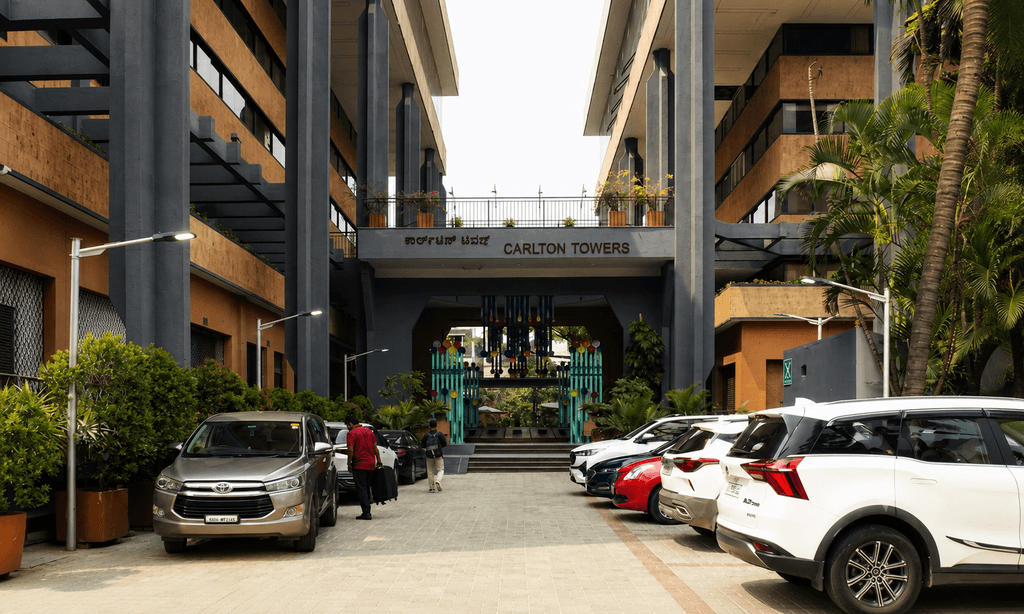
Indiranagar has an established urban ecosystem that offers more than offices. Its connectivity, restaurants, cafés, retail and social places to meet and spend time make the neighbourhood useful for teams that value the experience around their workplace as much as the workspace itself.
For freelancers, startups and smaller teams, that surrounding ecosystem can make a difference. Client meetings, informal conversations, lunch breaks and after-work interactions can all happen within the same neighbourhood.
A coworking space in Indiranagar can therefore offer more than a desk. The location itself becomes part of the working experience.
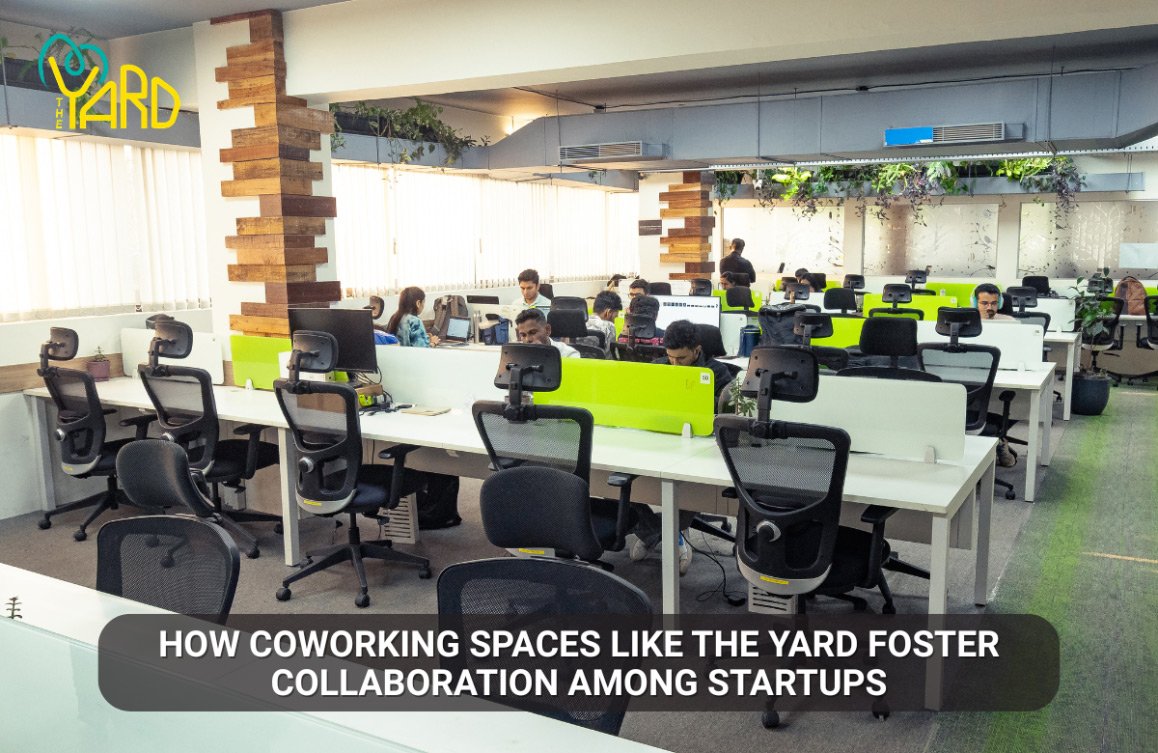
At The Yard, the Indiranagar workspace combines flexible work areas with meeting rooms, breakout areas, Wi-Fi, café and pantry facilities, parking and recreational spaces. That type of environment fits teams looking for flexibility alongside a well-established neighbourhood setting.
Why Bellandur Is Becoming More Strategically Relevant
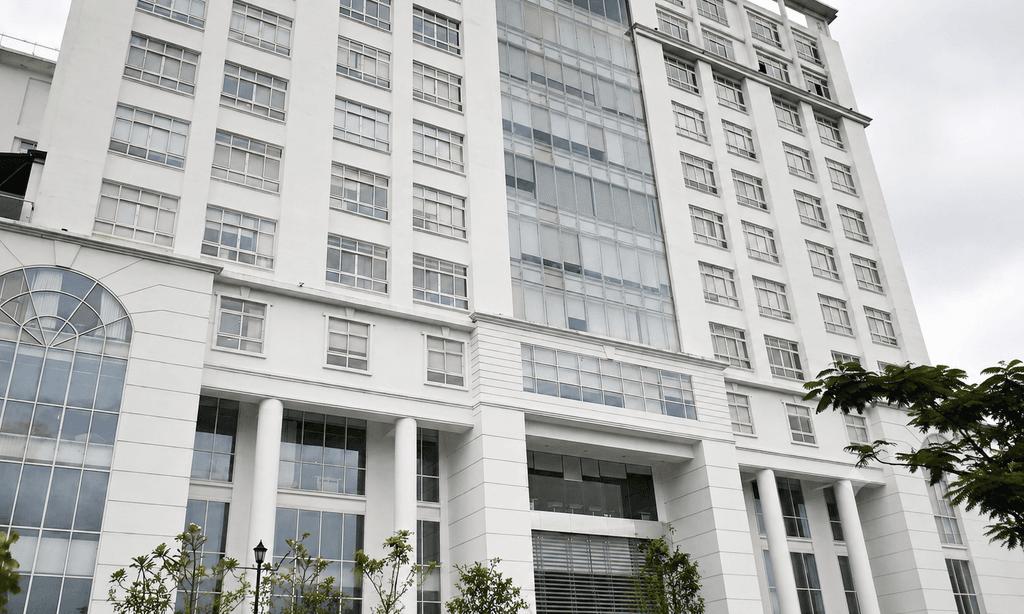
Bellandur has a different advantage. It sits within Bengaluru’s established Outer Ring Road business area, surrounded by major technology and corporate workplaces.
The upcoming Blue Line adds another layer to that existing business geography. Its Phase 2A corridor includes Bellandur and continues through Devarabeesanahalli, Kadubeesanahalli and Marathahalli towards KR Puram.
That means Bellandur’s importance isn’t based only on future infrastructure. It already functions as an important employment location, while new transport infrastructure is being added around it.
For teams considering Bellandur office space, the more useful question is therefore not whether the Metro will magically solve Bengaluru’s traffic problem. It is whether a combination of existing business presence, future public transport and workspace flexibility makes the location practical for their particular team.
What Better Connectivity Actually Changes for Teams
Employee Commute and Attendance
Connectivity can make office attendance more practical, but the effect varies from employee to employee.
A Metro station can help with a major part of a journey, while road connectivity can help employees who live or work beyond the Metro network. The best workplace location may therefore be one that gives most of the team a reasonable journey, rather than one that is simply close to a single station.
Last-mile travel remains important. An office five minutes from a station is a very different proposition from one that requires another long auto, cab or bus journey.
Talent Access and Recruitment
Workplace location can also influence the pool of people a company can recruit.
For a growing startup, for example, an office may need to be accessible to employees living across several parts of Bengaluru. A location that works for one founder’s commute may not work for a team of 30.
Better transport connections can increase that pool of employees over time. But businesses still need to look at where their employees actually live rather than assuming that a major infrastructure project benefits everyone equally.
Hybrid Work Changes the Equation
Hybrid work has made workplace decisions more flexible.
A team coming into the office two or three days a week may be more willing to travel further than a team that works onsite every day. At the same time, companies increasingly want office spaces that justify the journey by offering collaboration areas, meeting rooms and a better work environment.
That is one reason flexible workspace is becoming more important. Colliers recorded 8.6 million sq ft of flex-space leasing across India’s top seven cities in H1 2026, up 32% year on year. Bengaluru was among the leading markets for flex-space demand.
For businesses, flexibility can reduce the risk of committing to a fixed office setup before they know exactly how their teams will use the office.
What Connectivity Does Not Solve
Better infrastructure does not solve every workplace-location problem.
Last-mile connectivity still matters. A Metro station does not automatically make an office accessible if employees have difficulty reaching the station or completing the final part of their journey.
Employee geography still matters. A team distributed across South, East, North and West Bengaluru may not benefit equally from one transport corridor.
Project timelines can change. This is particularly important when businesses are making multi-year decisions. The Blue Line’s schedule has already moved from earlier completion targets, and the current plan is for phased commissioning.
That makes it sensible to evaluate a workplace based on the accessibility it has today, while treating future infrastructure as an additional consideration rather than the sole reason to choose a location.
Conclusion
Bengaluru’s infrastructure story is becoming a workplace story.
Namma Metro’s Blue Line is strengthening the public-transport connection through major employment corridors, while STRR is improving road connectivity between peripheral parts of the wider Bengaluru region. Neither project makes every location automatically more suitable for business, but both are expanding the ways companies can think about accessibility.
For businesses choosing Bangalore office space, the question is increasingly less about finding a prestigious pin on the map and more about understanding how that location works for the people who actually use it.
Employee geography, commute patterns, last-mile access, flexibility and workspace experience all matter. Future infrastructure can add another layer to that decision, but it should complement the fundamentals rather than replace them.
If your team is reassessing where to work in Bengaluru, exploring workspaces in Indiranagar and Bellandur can be a practical way to compare location, accessibility, flexibility and everyday work experience before making a longer-term commitment.
Compare Indiranagar and Bellandur for yourself — book a tour at The Yard.
FAQs
How will Namma Metro Phase 2 affect Bangalore office locations?
Namma Metro’s Blue Line is expected to improve public-transport connectivity between Central Silk Board, the Outer Ring Road corridor, KR Puram, Hebbal and Kempegowda International Airport. This could make some Bangalore office locations more accessible to employees, although the actual impact will depend on individual starting points and last-mile connectivity.
Which Bangalore office locations will benefit from the Blue Line?
The Phase 2A corridor includes major employment areas such as Bellandur, Devarabeesanahalli, Kadubeesanahalli and Marathahalli. Phase 2B extends the corridor towards Hebbal and the airport. Businesses should assess the benefit based on where their employees live and how easily they can complete the full journey.
How will STRR affect Bangalore office space?
STRR is designed to improve road connectivity between peripheral areas around Bengaluru, including corridors involving Hoskote, Anekal, Sarjapur, Devanahalli, Doddaballapur and Nelamangala. Its workplace impact is more likely to come through improved regional accessibility than an immediate transformation of every peripheral area into an office district.
Is Bellandur a good location for an office in Bangalore?
Bellandur is already part of a major employment corridor along the Outer Ring Road, particularly for technology and corporate businesses. Its future Blue Line connectivity adds another consideration for teams evaluating Bellandur office space, alongside employee commute patterns, last-mile access, workspace quality and cost.
Should businesses choose a coworking space near a Bangalore Metro station?
Metro proximity can be useful, particularly for teams with employees commuting from different parts of the city. But it should not be the only criterion. Businesses should also consider the distance from the station, last-mile transport, employee residential distribution, workspace amenities, flexibility and how frequently employees need to work onsite.


Leave a Reply
You must be logged in to post a comment.