
Top 10 Recruitment Strategies for Hiring Great Employees in 2025
Introduction
Did you know that 74% of employers globally are struggling to find the skilled talent they need, according to the 2025 ManpowerGroup Talent Shortage Report? Source: ManpowerGroup 2025 Talent Shortage Study. With skill needs changing faster than ever and candidate expectations rising, hiring great employees has become harder in 2025, and companies now need stronger recruitment strategies to find the right talent.
Competition is increasing, job roles are evolving, and candidates expect fast, transparent communication throughout the hiring journey. Research also shows that 62% of candidates lose interest if they don’t hear back within two weeks(source: Indeed), making hiring even more demanding.
What are the most reliable recruitment strategies that truly work in 2025?
Today, companies need smarter, system-driven hiring methods, not short-term fixes. This guide gives you clear, practical steps to help you attract the right talent, build trust, and speed up your hiring cycle. Every strategy is simple, modern, and built for startups and small businesses that want predictable and consistent hiring results.
This article highlights the top 10 recruitment strategies for hiring great employees so you can create a strong, scalable, and future-ready hiring process in 2025.
What Is a Recruitment Strategy
A recruitment strategy is a clear, organised plan that helps companies attract, evaluate, and hire the right candidates. It combines employer branding, sourcing channels, recruitment marketing, screening methods, and structured interviews to create a consistent hiring process.
A strong recruitment strategy makes hiring faster, improves candidate quality, and reduces guesswork. It usually includes steps like optimising job posts, using referral programs, building a talent pipeline, and setting clear evaluation criteria.
For example, a small business may create a strategy that covers job posting SEO, outreach on LinkedIn, resume screening guidelines, and a standard interview scorecard to ensure fair and effective hiring.
Top 10 Recruitment Strategies for Hiring Great Employees
Learn how startups and small businesses can improve hiring, build a strong employer brand, and hire skilled employees faster:
1. Build a Clear and Strong Employer Brand – Top Recruitment Strategy 2025
Your employer brand shows candidates what it feels like to work in your company. It shows your culture, values, growth mindset, and work environment. A strong employer brand attracts high-quality applicants and reduces time spent convincing them to join.
Use simple steps to build it.
• Create a clear employee value proposition.
• Highlight team stories on LinkedIn.
• Share wins, culture moments, and projects.
• Build a clean and informative career page.
A startup can post short videos of team members sharing their daily work and learning moments. These authentic stories help candidates trust your brand.
2. Best Recruitment Strategy in 2025 – Optimize Job Descriptions for Search and Clarity
Most companies fail because they don’t follow clear recruitment strategies when writing job descriptions. Candidates want simple, clear information, especially in 2025. Search engines also depend on keyword clarity. Use simple job titles with NLP-friendly terms like digital marketing manager or frontend developer. Ensure each job description is SEO-friendly by including relevant keywords, skill clusters, and role-based search terms. For example, for a developer role, use terms like ‘Python developer’, ‘backend skills’, ‘API development’, and ‘software engineering’. This helps job postings appear in search results and attract more qualified candidates.
Add important parts.
• Role overview
• Key responsibilities
• Expected outcomes
• Skills and experience
• Tools used
• Growth opportunities
Use India-specific platforms like Naukri, Instahyre, Hirect, and LinkedIn Jobs. Add salary transparency because it improves ranking, trust, and application quality. You can also cluster keywords inside the JD, such as Python developer, backend skills, and API development.
3. Use Multi-Channel Sourcing Instead of Only Job Boards
Job portals are useful, but never enough. Strong hiring in 2025 needs multi-channel sourcing. This helps you connect with both active and passive candidates.
Try these channels.
• LinkedIn, Instagram, Twitter or X
• Niche job boards
• Freelancing sites for contract-to-hire roles
• Talent communities
• Alumni groups
• Coworking networks and startup communities
• Local hiring events
Coworking spaces like The Yard often connect founders, freelancers, and small teams. These networks become informal talent pools that help you find skilled people more organically.
Track which channels bring the best candidates to refine your hiring funnel.
4. Leverage Employee Referral Programs for Faster Hiring Results
Referral hires are usually faster and more trustworthy. Data shows that referrals can reduce time to hire by up to 55 percent.
Build a simple referral system.
• Announce roles internally
• Add a clear reward structure
• Share referral updates and deadlines
• Track referral quality
• Avoid duplicate or fake referrals through basic verification
Example. A startup announces a bonus of 5000 rupees for every successful referral. They share a simple form and give updates on candidate progress. Within two months, they receive skilled applicants without heavy spending.
5. Improve the Interview and Screening Experience for Better Candidate Experience
Candidates judge your company based on interview speed, clarity, and fairness. A structured interview process improves candidate experience, supports better talent acquisition, and creates a fair hiring system.
Use these methods.
• Create interview scripts
• Use structured questions
• Add skill-based tasks
• Use interview scorecards
• Involve cross-functional team members
Growing teams at The Yard often host interviews in collaborative spaces where teams can evaluate candidates in a calm, creative environment. It helps create a comfortable experience for both interviewers and candidates.
6. Use Modern Hiring Tools like ATS and AI for Data-Driven Recruitment Strategies
Modern hiring tools help small teams work faster, make the recruitment process more consistent, and reduce hiring bias. A simple applicant tracking system (ATS) keeps all applications, communication, and interview updates in one place. Following the latest HR tech trends, including AI-based tools, helps streamline recruitment, improve candidate experience, and save time.
Recommended Tools and Their Best Use:
| Tool | Best For | Beginner-Friendly | Pros | Cons |
| Freshteam | Small teams, basic ATS | Yes | Simple setup, free plan, easy tracking | Limited advanced automation |
| Zoho Recruit | Growing startups | Medium | Customizable workflows, AI resume parsing | Slightly complex UI for beginners |
| Recruitee | Collaborative hiring | Yes | Team collaboration, reporting dashboards | Higher cost for small teams |
| Breezy HR | Hybrid/remote teams | Yes | AI-powered shortlisting, skill clustering | Limited integrations with Indian job portals |
This table shows which tool is best for your team size and hiring needs, and highlights beginner-friendly options.
How to Use Modern Tools in Your Hiring Workflow
Job Posting → Applications → Screening → Interview → Offer → Onboarding
AI tools can help shortlist resumes, cluster skills, and automate follow-ups. Modern hiring software reduces bias, ensures consistent processes, and improves overall recruitment efficiency. Always verify data privacy compliance when using AI-based solutions.
7. Create a Strong Candidate Experience to Improve Talent Acquisition
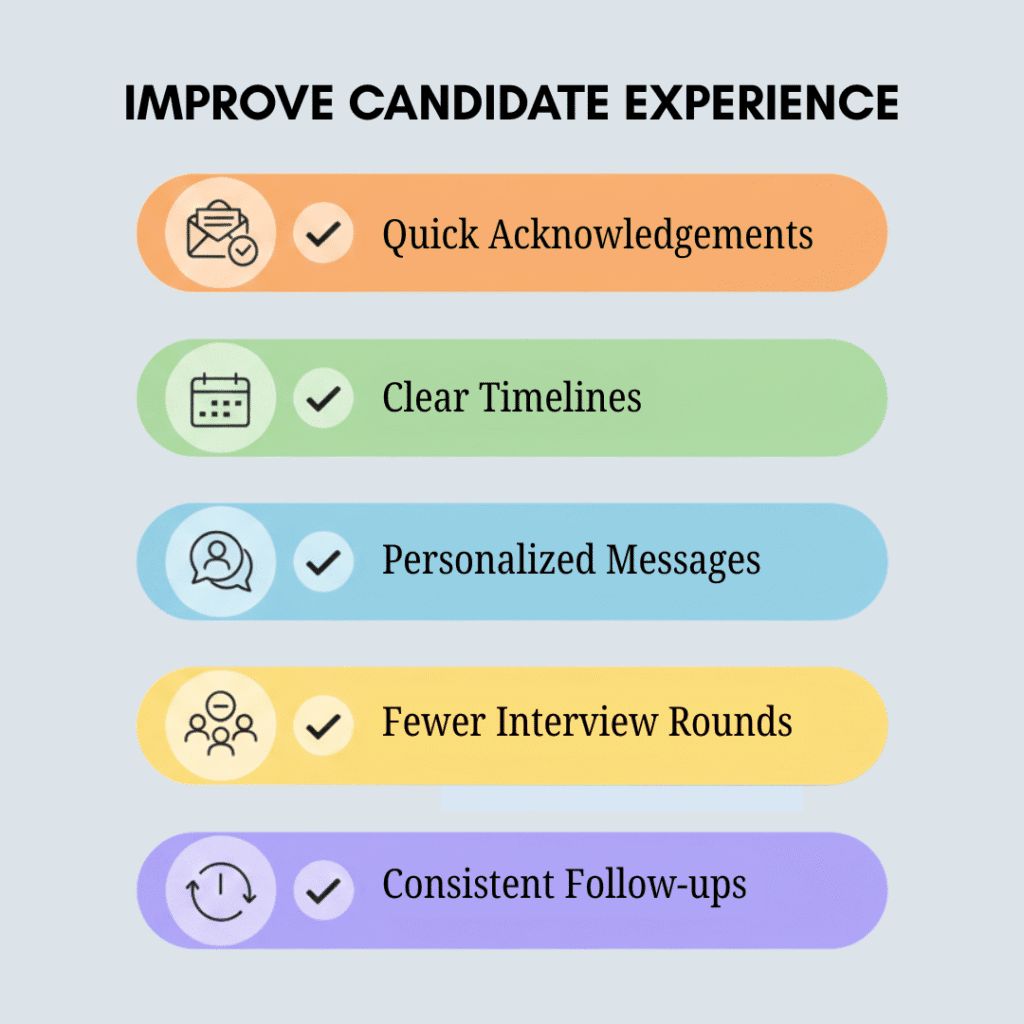
Candidate experience affects your brand. If people feel ignored or confused, they will not apply again. Good experience improves referral quality and offers acceptance rates.
Follow this checklist.
• Send quick acknowledgements
• Share timelines clearly
• Use personalised communication
• Reduce interview rounds if not required
• Give feedback whenever possible
Many companies lose applicants due to ghosting. Set reminders for follow-ups to avoid this. Use simple templates that HR can send within seconds.
8. Tap Into Offline and Community Hiring to Reach Skilled Candidates
Online hiring is useful. But offline hiring builds stronger connections. Community hiring helps you meet candidates who are genuinely passionate and skilled.
Try these:
• Hiring events in coworking spaces
• Workshops and panels
• College hiring and internship programs
• AMA sessions with founders
• Local tech meetups and networking
Bangalore’s startup community uses coworking spaces like The Yard for workshops, coding events, and networking sessions. These events naturally bring talent and employers together. Add DEI principles to attract a diverse range of candidates.
9. Strengthen Onboarding to Improve Retention and Reduce Early Drop-Offs
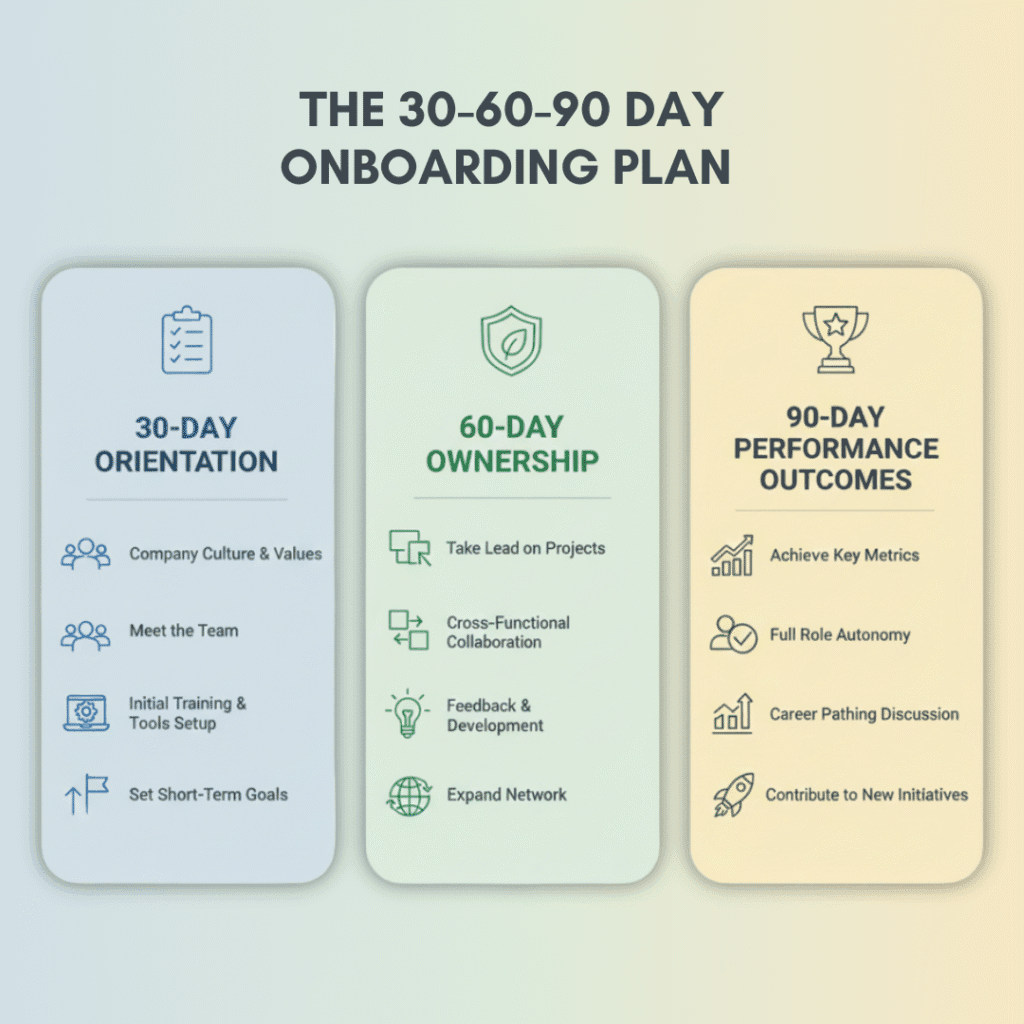
Hiring success is not complete without good onboarding. A smooth onboarding experience helps new employees settle faster and stay longer. Strong onboarding reduces early resignations.
Use a 30 60 90 day plan.
• 30 days: orientation, learning, introductions
• 60 days: deeper ownership
• 90 days: measurable outcomes
Add a buddy system to help new hires adjust. For hybrid teams, use virtual onboarding tools to share documents, training videos, and checklists.
10. Track Hiring Metrics for Data-Driven Recruitment Strategies in 2025
Data helps you see what is working. You can improve your hiring process by tracking simple metrics.
Track these.
• Time to hire
• Source effectiveness
• Cost per hire
• Candidate drop-off points
• Offer acceptance rate
Track per-strategy KPIs for better insights:
• Referral Program – Time to hire via referral, % hires from referrals
• Job Description – Candidate drop-off rate from job posting, number of applications per posting
• Candidate Experience – Engagement score, % reduction in ghosting, offer acceptance rate
• Interview & Screening – Average interview completion time, candidate satisfaction score
Industry benchmarks show that top teams keep time to hire between 25 and 35 days. Use a simple dashboard to measure your funnel and improve performance.
Building a great team starts with the right environment. If you want an inspiring workspace for interviews, collaborations, or team sessions, explore The Yard. It is Bangalore’s creative green coworking community where teams feel energised and supported.
If you want a productive and creative workspace to host interviews or team meetings, explore The Yard. It supports founders and small teams with a professional environment built for growth.
Additional Tips for Small Businesses and Startups
Small companies often have limited budgets. Smart hiring can still bring great talent.
Here are useful ideas.
• Prioritise your first three hires: tech, operations, and marketing
• Use a contract-to-hire models
• Focus on skill-based hiring
• Offer flexible work options
• Highlight growth opportunities
• Use hybrid hiring to widen your talent pool
These simple methods help you compete with bigger brands without spending too much.
Conclusion
Hiring great employees needs strong and consistent recruitment strategies. When companies optimize their hiring systems in 2025, they attract better talent and reduce hiring time. Use these strategies to attract serious talent, build trust, and create a strong recruitment cycle.
Consistently applying these methods will help your company stay ahead in the competitive talent market and create a team that drives growth. Remember, great hiring leads to a stronger culture, higher productivity, and long-term success.
If you want a creative space where your team can grow, learn, and collaborate, explore The Yard. Join our community and create a workspace where ideas feel alive.
FAQs
1. What are the best strategies to hire great employees?
The best strategies include employer branding, clear job descriptions, referrals, multi-channel sourcing, structured interviews, ATS tools, strong candidate experience, and onboarding for faster, quality hires.
2. How can startups improve their recruitment process?
Startups can improve recruitment by using clear job posts, structured interviews, quick communication, modern hiring tools, and tracking key metrics to reduce drop-offs.
3. Why is employer branding important for hiring?
Employer branding shows what your company stands for, builds trust, attracts skilled candidates, and reduces hiring costs while improving applicant quality.
4. Which tools help small businesses recruit effectively?
Tools like Zoho Recruit, Freshteam, Breezy HR, and Google Sheets help small businesses organise hiring, track applicants, and communicate efficiently with minimal costs.
5. What is the most cost-effective hiring strategy for startups?
Building referrals, using social media sourcing, and leveraging local communities or coworking spaces help startups hire skilled employees without high costs.


Leave a Reply
You must be logged in to post a comment.