

Why Employees Are Hesitant to Return to the Office and How Employers Can Respond
Introduction
A 2025 Appspace report says that 66 percent of employees still prefer remote work over a full-time office routine.
(Source). This return-to-office hesitation is even stronger in Bangalore, where long commutes and rising expectations for autonomy make many employees hesitant to return. These shifts reveal what’s really driving RTO resistance — and what employers can do about it in today’s hybrid-first world.
Today’s workforce wants productivity with balance. However, they no longer prefer rigid visibility-based routines. Employers now need work environments that support focus, creativity, and well-being while aligning with modern hybrid work expectations.
This is where coworking spaces like The Yard in Bangalore help. With sustainable design, greenery, and hybrid-friendly layouts, The Yard creates inspiring spaces that naturally encourage employees to return without pressure. This article explores the main reasons behind RTO hesitancy and offers practical ways employers can respond effectively.
Understanding these workplace shifts helps employers redesign environments that support autonomy, collaboration, and employee comfort.
The Shift in Workplace Expectations During the Return to the Office
The Post-Pandemic Reality and RTO Hesitancy for Indian Teams
Employees in Bangalore, especially in tech and startup roles, now value autonomy more than ever.
In addition, many professionals want flexible hours, reduced commute stress, and a workspace that feels meaningful rather than mechanical.
Hybrid work has become the preferred model because it lets employees control their day. Additionally, it allows them to connect with colleagues whenever needed.
Data Snapshot: Indian Employee Sentiment on Returning to the Office
Surveys across India show that more than half of employees prefer hybrid work over full-time office schedules.
According to a 2022 survey by Colliers India, around 63% of Indian firms were already embracing a hybrid-working model, and 53% of those firms reported that productivity had increased under hybrid arrangements. Source link: NASSCOM Community
Moreover, Bangalore adds another layer of long commutes and traffic congestion, making daily office travel tiring. Employees also say they work productively at home, making strict office mandates feel unnecessary.
What Employees Want in Hybrid Workspaces During the Return to the Office?
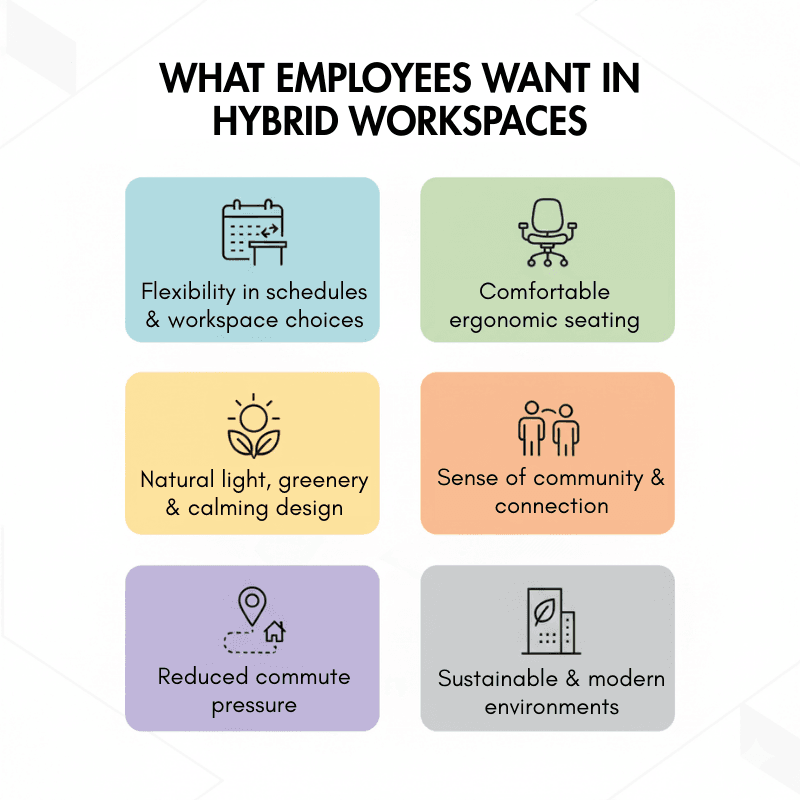
Modern teams expect more than desks and meeting rooms. They want:
• Flexibility in schedules and workspace choices
• Comfortable, ergonomic seating
• Natural light, greenery, and calming design
• A sense of community and connection
• Reduced commute pressure
• Sustainable and modern work environments
These expectations shape why people hesitate to return; it is not resistance; it is misalignment.
Top 5 Reasons for RTO Hesitancy and Why Employees Avoid Returning to the Office
Understanding these drivers helps employers craft better policies and design workspaces people actually want to return to.
1. Loss of Work-Life Balance
Remote work gave employees control over their time. Returning to the office removes that control and adds a long commute. For many, it feels like losing balance.
2. Productivity Perception Gap
Employees believe they perform better at home, which increases RTO hesitancy. Managers still rely on physical visibility, creating a gap in expectations during the return to the office. This mismatch affects employee motivation and makes strict return-to-office strategies feel unnecessary.
3. Office Environment Not Inspiring Enough
Employees dislike bland cubicles, harsh lighting, and rigid seating. They want inspiring spaces with greenery, natural textures, and community areas.
When the office feels dull, returning feels like a downgrade.
4. Emotional Factors
Micro-management fears, rigid schedules, and performance pressure make some employees anxious about going back.
5. Mismatch in Expectations
Employers want collaboration. Employees want autonomy.
This gap is where workspace design becomes important, and an inviting, flexible space encourages natural return.
Common Mistakes Employers Make During the Return-to-Office Transition
• Enforcing strict schedules without discussion
• Not upgrading or redesigning outdated offices
• Focusing only on rules, not employee well-being
• Overlooking psychological safety and trust-building, which are now core parts of hybrid team expectations in India.
• Not involving employees in decisions
• Assuming that presence equals productivity
These mistakes slow down return-to-office progress and increase resistance.
Return-to-Office Strategies: A Practical 5-Step Hybrid Work Framework for Employers
Step 1: Build Trust Through Transparency
Explain the purpose behind return-to-office decisions.
Hold town halls. Share hybrid guidelines. Listen to concerns.
Trust grows when communication is open.
Step 2: Redesign the Workspace for Engagement
A workspace should motivate people.
Employers can add:
• Flexible seating
• Breakout areas
• Quiet focus zones
• Green corners and natural lighting
• Eco-friendly materials
These sustainable elements make hybrid work smoother and reduce the resistance many employees feel during the return-to-office transition.
Spaces like The Yard in Bangalore already do this through greenery, modern design, and community-driven layouts. These elements naturally pull people back to work.
Step 3: Create a Hybrid Policy That Works
A clear hybrid system reduces confusion.
Examples:
• Core collaboration hours
• Role-based flexibility
• Team-chosen in-office days
When hybrid rules are simple, employees feel secure and respected.
Step 4: Prioritize Mental and Emotional Well-Being
Companies can support teams with:
• Wellness rooms
• Quiet pods
• Breakout zones for relaxation
• Manager training on empathy
A healthy environment increases the likelihood of return..
Step 5: Offer Alternative Workspaces (Coworking / Flex Spaces)
If a central office feels distant or rigid, employers can use coworking spaces to foster collaboration.
Benefits include:
• Shorter commute options across the city
• Modern, inspiring interiors
• Community events
• Ready-to-use infrastructure
• Better cost efficiency
Bangalore’s flex space ecosystem is strong, and sustainable coworking spaces like The Yard offer an immediate solution for hybrid teams.
How to Involve Employees in Return-to-Office Decisions?
• Run quick surveys about preferences
• Test hybrid weeks to see what works
• Collect feedback after each phase
• Co-create policies with employee input
When employees feel ownership, their resistance drops.
How Workspace Design Supports Hybrid Work and Reduces RTO Hesitancy?
The Power of Natural Elements
Plants, sunlight, and natural colours reduce stress and increase focus. Biophilic design is now a major workplace trend.
Modern hybrid teams also need ergonomic zones, acoustic pods, and flexible seating layouts that support both focused work and collaboration.
Community and Belonging
Employees return when they feel connected.
Coworking spaces offer community events, shared culture, and collaboration opportunities that traditional offices often lack.
Sustainability as a Motivator
Younger professionals prefer eco-friendly companies.
The Yard’s green approach, plants, recycled materials, and open-air feeling make the workspace more attractive and meaningful.
Bangalore Trends: Why Flexible Workspaces Support Return-to-Office Strategies
City-Level Indicators
• Tech boom continues
• Commute stress is increasing
• Hybrid work is becoming standard
• Demand for flexible workspace solutions in Bangalore has surged as companies move toward long-term hybrid models.
• Distributed teams need distributed workpoints
Why Employers Are Shifting to Flex Spaces?
• Better cost control
• No long leases
• Quick setup
• Modern design
• Higher employee satisfaction
Traditional Office vs Hybrid Office vs Coworking Space
| Model | Flexibility | Cost | Motivation | Sustainability | Culture | Commute Impact |
| Traditional Office | Low | High lease cost | Often low | Low | Limited | High |
| Hybrid Office | Medium | Balanced | Medium–High | Medium | Good | Reduced |
| Coworking Space | High | Pay-as-you-use | High | High | Strong | Low due to multiple locations |
This comparison shows why many Bangalore employers now mix hybrid policies with coworking access.
Return-to-Office Checklist for Employers in the Hybrid Work Model
• Is the workspace designed to support hybrid work in Bangalore with flexible seating and focus zones?
• Is the workspace flexible and modern?
• Is employee feedback included?
• Is the environment inspiring?
• Are hybrid rules clear?
• Is sustainability a priority?
• Have coworking options been explored?
FAQs
RTO hesitancy is rising mainly due to commuter stress, loss of flexibility, and uninspiring office design. These factors reduce employee motivation during the return-to-office phase.
A simple model with core hours plus team-defined collaboration days. A clear hybrid framework also reduces RTO confusion and helps teams transition smoothly.
Yes, they offer flexibility, modern design, and community without long leases.
Natural light, greenery, comfort, and good layout increase focus and happiness.
Through trust, flexibility, better design, community building, and coworking choices.
Final Thoughts
Employees are not resisting the return to the office. They are simply asking for better experiences that support comfort, flexibility, and real productivity. The goal is not to force attendance but to create workspaces that feel worth returning to, with thoughtful design, inspiring environments, and hybrid-friendly systems.
Employers who invest in flexible policies, strong hybrid work models, and well-designed offices see higher engagement, less RTO hesitancy, and smoother return to the office transitions. Sustainable coworking spaces like The Yard offer an immediate solution for teams that want modern design, greenery, and a workspace that supports both focus and collaboration.
To explore how The Yard fits your workspace strategy, book a visit and experience the green, creative environment firsthand.
Visit The Yard, book a tour, and experience how an urban oasis can transform the way you work.
Linkedin: The Yard Coworking Space
Instagram: Theyardcoworking
Facebook: The Yard

Leave a Reply
You must be logged in to post a comment.