

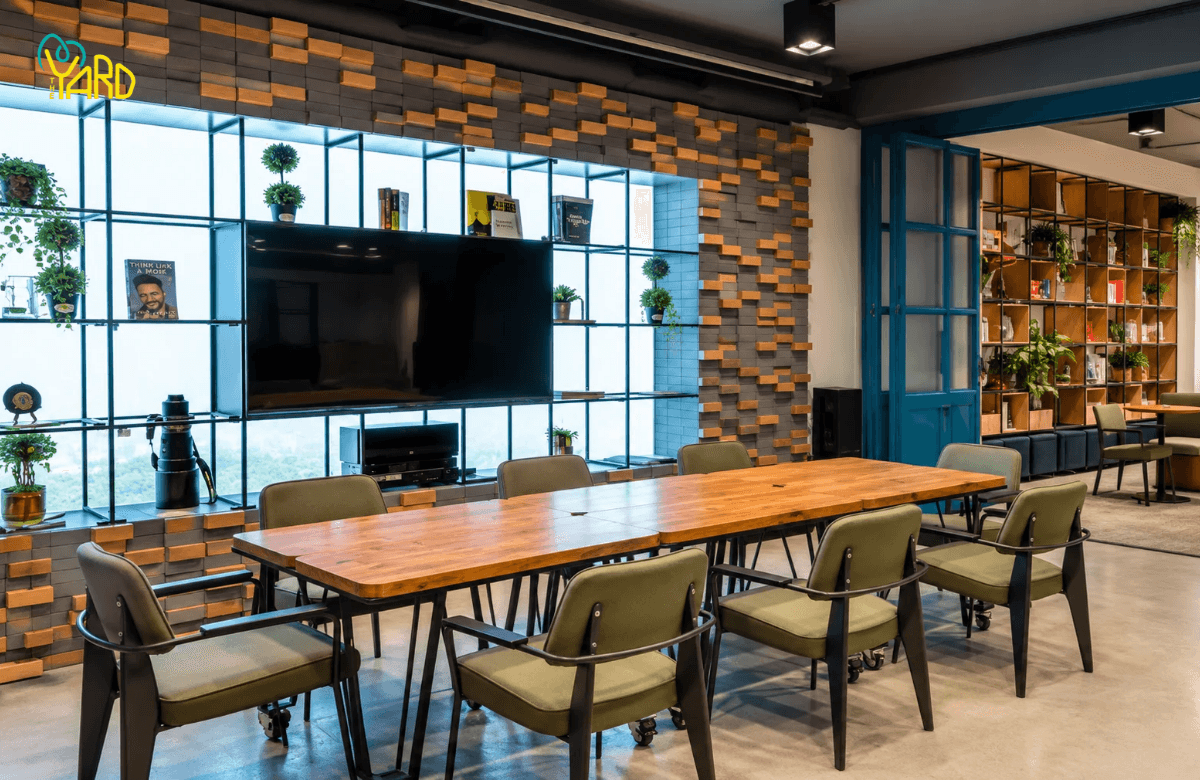
6-Seater vs 10-Seater Meeting Room: Which Size Is Right for You?
Six people around a table can feel comfortable in one meeting room and cramped in another. So, when choosing between a 6-seater vs 10-seater meeting room, the number of chairs is only the starting point.
Headcount is not the only factor to consider when choosing the right meeting room. The type of meeting, amount of equipment you need, space for laptops and documents, privacy, comfort, and budget can all influence the decision. This guide will help you choose a meeting room based on what your meeting actually requires.
6-Seater vs 10-Seater Meeting Room: At a Glance
A 6-seater meeting room is generally meant for smaller, focused meetings, while a 10-seater meeting room gives larger groups more room to collaborate, present and accommodate more participants.
| Factor | 6-Seater Meeting Room | 10-Seater Meeting Room |
| Ideal group | Small teams and meetings | Larger teams and stakeholder meetings |
| Best for | Discussions, interviews, client meetings | Presentations, larger team meetings, workshops |
| Space | More compact | More room for participants and equipment |
| Cost | Usually lower | Usually higher |
| Best choice when | Attendance is confirmed and manageable | More people or additional space may be needed |
Cost can also influence the choice. At The Yard, the 6-seater meeting room is currently listed at ₹800 per hour, while the 10-seater is listed at ₹1,200 per hour. Both are described as well-equipped meeting rooms with high-speed internet, presentation equipment and catering options.
The key is not to simply choose the larger room. Instead, consider how many people will attend and what they need to do during the meeting.
When Should You Choose a 6-Seater Meeting Room?
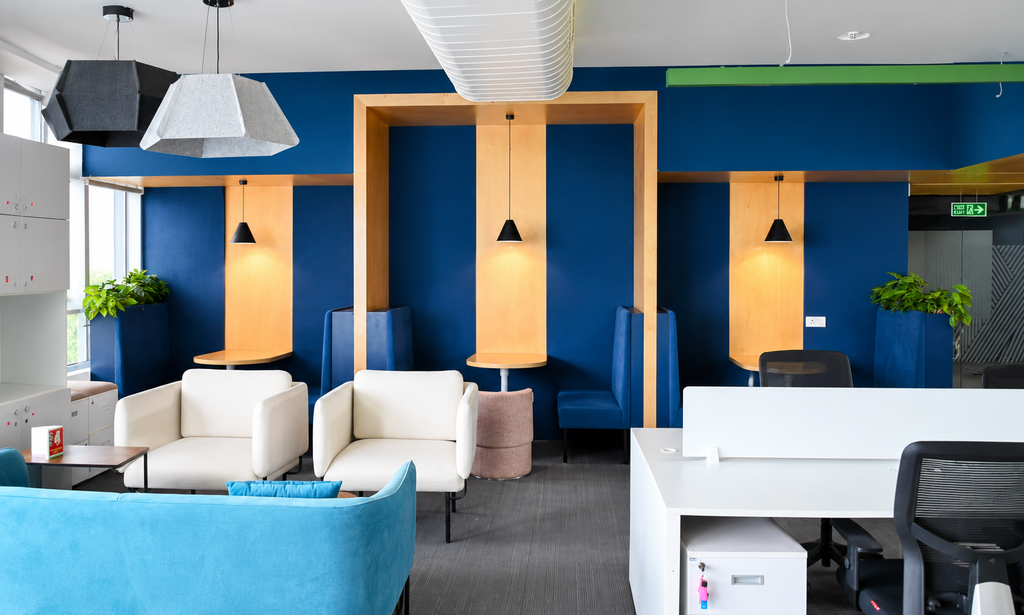
Best for Small Team Discussions
A 6-seater meeting room is a practical choice when your group is small and everyone needs to take part in the conversation.
For example, a startup team of four to six people discussing a product launch, reviewing a project or planning the next quarter can usually work comfortably in a 6-seater space. A smaller room can help with easy discussion without paying for unused space.
It also works well when attendance is confirmed. If you know exactly who is coming and the meeting is primarily discussion-based, it may not make sense to book a larger conference room.
Ideal for Client Meetings and Interviews
A 6-seater meeting room can also suit client meetings, interviews and small consultations. These meetings often involve a small number of people and work well in a focused, professional environment.
For instance, a freelancer meeting two clients, a recruiter interviewing a candidate with another team member present, or a consultant discussing a project with a client may not need a 10-person room.
The goal is to create enough space for comfortable seating, laptops, documents and conversation without making the meeting feel unnecessarily large.
When a Smaller Room Creates a Better Meeting Experience
More space is not automatically better.
A room designed for ten people may be useful when you have a larger group, but a small group does not always need that extra space. If six people are having a straightforward discussion, a well-organised 6-seater is a better option.
The important point is whether participants have enough room to sit comfortably, use their laptops or documents and move around without feeling cramped.
When Is a 10-Seater Meeting Room the Better Choice?
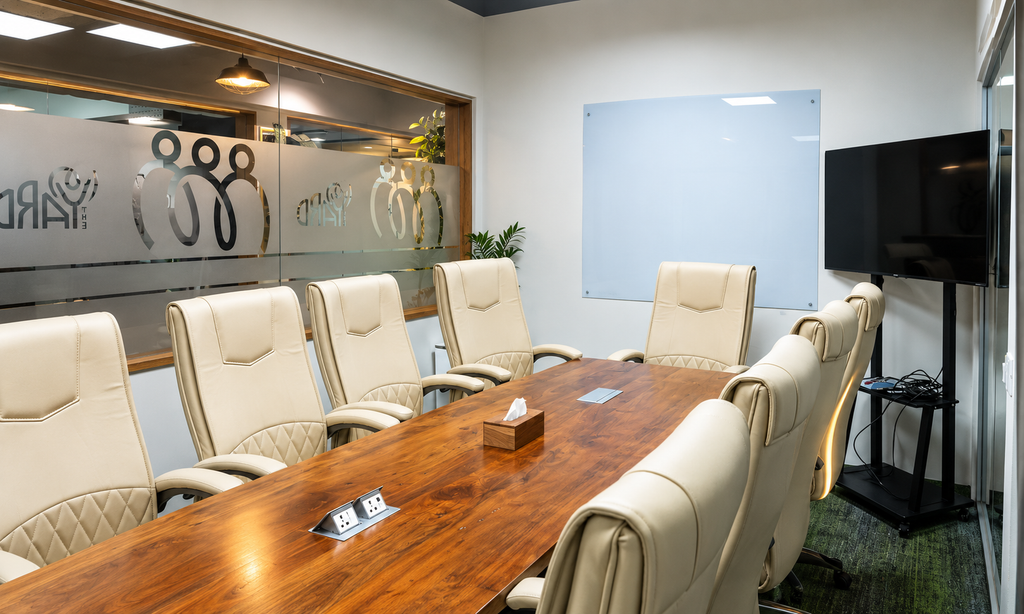
Best for Larger Team Meetings
A 10-seater meeting room makes more sense when your group has seven to ten people.
This can include larger team meetings, stakeholder discussions, project reviews or meetings involving people from different departments. With more participants, table space and comfortable seating become more important.
A 10-seater can also give you more flexibility if the final attendee list changes shortly before the meeting.
When Presentations and Collaboration Need More Space
Meeting purpose can matter just as much as headcount.
Suppose seven people are attending a presentation. If everyone needs a laptop, presentation screen, documents or room to take part in the presentation, a larger meeting room may make more sense than simply booking a room based on the number of attendees.
The Yard lists presentation equipment and high-speed internet among the facilities available with its meeting rooms.
This is particularly relevant for presentations, brainstorming sessions, workshops and hybrid meetings where equipment can take up extra space.
When Your Attendee Count May Change
A 10-seater can also be useful when the final number of attendees is uncertain.
Perhaps a client is bringing another colleague, a founder expects two additional stakeholders, or a team meeting has been opened to more employees. Booking a room with some additional capacity can prevent a last-minute search for a larger space.
That does not mean you should always book bigger. If your meeting is definitely limited to four or five people, paying for unused capacity may not provide much additional value.
6-Seater vs 10-Seater: What Should You Consider Before Booking?
Number of Attendees
Start with the headcount, but do not stop there.
As a practical guide, one to four people will generally have plenty of capacity in a 6-seater. Five to six people can also use a 6-seater comfortably when the meeting is straightforward. For seven or eight people, consider the type of meeting, equipment and table space you need. For nine or ten participants, a 10-seater is the more natural starting point.
These are practical guidelines rather than fixed industry standards. The actual room layout and meeting requirements still matter.
Purpose and Format of the Meeting
Ask what participants will actually be doing.
A six-person team discussion, a six-person presentation and a six-person workshop can have very different space requirements. A client meeting may prioritise privacy and comfortable conversation, while a presentation may require more room for screens, laptops and movement.
Think about whether your meeting involves:
- Client discussions
- Interviews
- Team reviews
- Presentations
- Brainstorming
- Workshops
- Stakeholder meetings
Choosing the room around the meeting format can prevent both overbooking and cramped setups.
Presentation and Technology Requirements
Technology can change how much usable space your meeting needs.
Before booking, check whether you require high-speed internet, presentation equipment, a display, video conferencing, power access or a whiteboard. Do not assume every meeting room provides the same setup.
If several participants will be presenting from laptops or joining remotely, additional table and equipment space can make a noticeable difference to the meeting experience.
Comfort, Movement and Privacy
A room can technically accommodate ten people without being the most comfortable room for ten people.
Consider whether participants can enter and leave without disrupting others, whether there is enough table space for laptops and documents, and whether everyone can clearly see the presentation screen.
Privacy matters too, particularly for client conversations, interviews and business discussions. The right meeting room should support the way the conversation will take place, rather than simply meeting a numerical capacity.
Budget and Meeting Duration
Your meeting duration can make room selection a meaningful cost decision.
At the current listed rates at The Yard, a two-hour booking would cost ₹1,600 for the 6-seater and ₹2,400 for the 10-seater, before any applicable changes or additional charges.
For a short meeting with six people and minimal equipment, the smaller option may make more financial sense. For a longer presentation involving several stakeholders, the additional space of a 10-seater may justify the higher hourly rate.
Always confirm the current price and booking terms before making a reservation.
What to Check Before Booking a Meeting Room in Bangalore
Location and Accessibility
For meetings in Bangalore, location can be particularly important when people are travelling from different parts of the city.
Consider where your clients, employees or other attendees are coming from, along with parking, public transport and road accessibility. A convenient meeting location can make it easier for clients to arrive on time and reduce unnecessary travel hassles.
The Yard’s Bellandur workspace, for example, lists meeting rooms alongside high-speed fibre Wi-Fi, parking, lounge areas and other workspace facilities.
Technology and Meeting Amenities
Before booking the meeting room, check the facilities you actually need.
A useful checklist includes:
- High-speed internet
- Presentation or display equipment
- Video conferencing capability
- Power access
- Whiteboard
- Comfortable seating
- Catering or refreshments
- Reception or waiting area
The goal is not to find a room with the most amenities. It is to make sure the room supports your specific meeting.
Confirm the Actual Room Setup
Finally, check how the room is arranged.
A “10-seater” label tells you the capacity, but not necessarily how much working space each person will have. If possible, review the room layout and confirm where the table, seating, screen and other equipment are positioned.
For important client meetings or presentations, arriving early enough to test your laptop, internet connection and presentation equipment can also prevent avoidable last-minute problems.
6-Seater or 10-Seater? A Simple Decision Guide
Choose a 6-seater meeting room when:
- Your group is small and attendance is confirmed.
- The meeting is mainly discussion-based.
- You need a focused setting.
- You do not require substantial additional equipment or table space.
- Keeping the hourly cost lower matters.
Choose a 10-seater meeting room when:
- Your group is closer to seven to ten people.
- Several stakeholders are attending.
- You need more table or equipment space.
- The meeting includes a presentation, workshop or collaborative activity.
- The final attendee count may increase.
As a simple rule, choose the smallest room that can comfortably support the people, purpose and equipment involved in your meeting.
Meeting Rooms at The Yard
If you are looking for a professional meeting space in Bangalore, The Yard offers both 6-seater and 10-seater meeting rooms. Its website currently lists the 6-seater at ₹800 per hour and the 10-seater at ₹1,200 per hour. Both options are described as well-equipped, with high-speed internet, presentation equipment and catering options.
That lets professionals choose a room according to the size and format of their meeting rather than committing to a permanent office.
Whether you are meeting a client, interviewing a candidate, reviewing a project with your team or presenting to stakeholders, the better choice is the room that fits the actual requirements of the session.
If you already know your expected headcount and meeting format, you can explore The Yard’s available meeting-room options and choose the capacity that fits your requirements.
Conclusion
Choosing between a 6-seater vs 10-seater meeting room is not simply about counting chairs. The right choice comes down to three things: how many people are attending, what they need to do, and how much space the meeting requires.
For small, confirmed groups and discussion-led meetings, a 6-seater can provide an efficient and comfortable setup. When the group is larger, the meeting involves presentations or you need additional space for equipment and collaboration, a 10-seater may be more suitable.
The best meeting room is not necessarily the biggest one. It is the one that gives your team, clients or stakeholders enough space to meet comfortably, communicate clearly and get the work done.
Ready to book a room? See meeting room pricing or book a tour at The Yard.
FAQs
1. What is the difference between a 6-seater and 10-seater meeting room?
The main difference is seating capacity and available working space. A 6-seater meeting room is generally suited to smaller discussions, interviews and client meetings, while a 10-seater is more suitable for larger teams, presentations and stakeholder meetings.
2. Is a 6-seater meeting room enough for six people?
Yes, a 6-seater can be suitable for six people when the meeting is primarily discussion-based and the room provides comfortable seating and enough table space. If the meeting involves extensive presentation equipment, laptops or movement, consider whether additional space would be useful.
3. What size meeting room is best for a client meeting?
The right size depends on the number of attendees and the meeting format. A small client discussion with two to six participants can often work well in a 6-seater. A larger client presentation involving several stakeholders may be better suited to a 10-seater.
4. When should I book a 10-seater meeting room?
Choose a 10-seater meeting room when your group is closer to seven to ten people, when several stakeholders are attending, or when your meeting requires additional space for presentations, laptops, documents or collaborative activities.
5. What should I consider before booking a meeting room in Bangalore?
Consider attendee count, meeting purpose, room layout, privacy, technology, internet connectivity, presentation equipment, accessibility and hourly pricing. Checking these factors before booking helps ensure the meeting room supports both your practical requirements and your budget.
Leave a Reply
You must be logged in to post a comment.